In Granite Falls, the Dock and the House Don't Always Change Hands Together
September 17, 2026
September 17, 2026
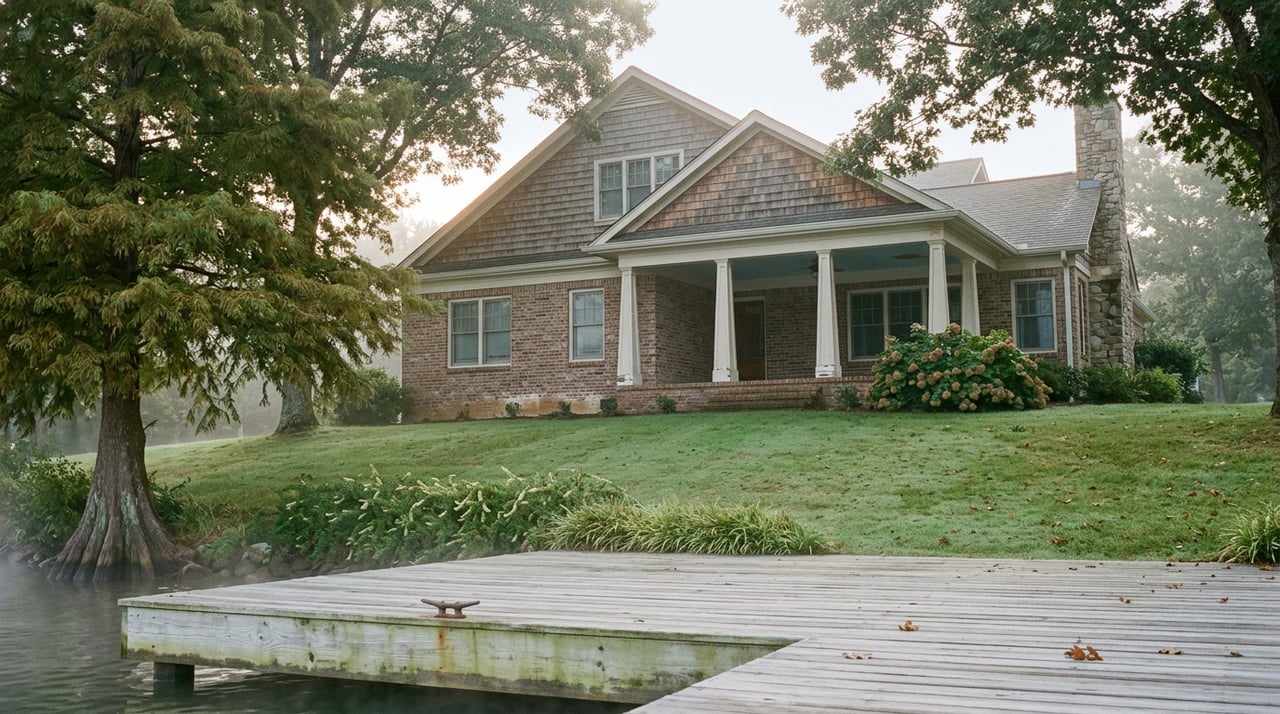
The offer is accepted. The survey comes back clean. The inspector notes a few loose deck boards and calls it a day. Everyone assumes the dock, sitting right there in the listing photos with a boat lift and a covered slip, transfers the same way the refrigerator does.
Then the buyer's agent makes one phone call to confirm the dock permit, and the closing stalls.
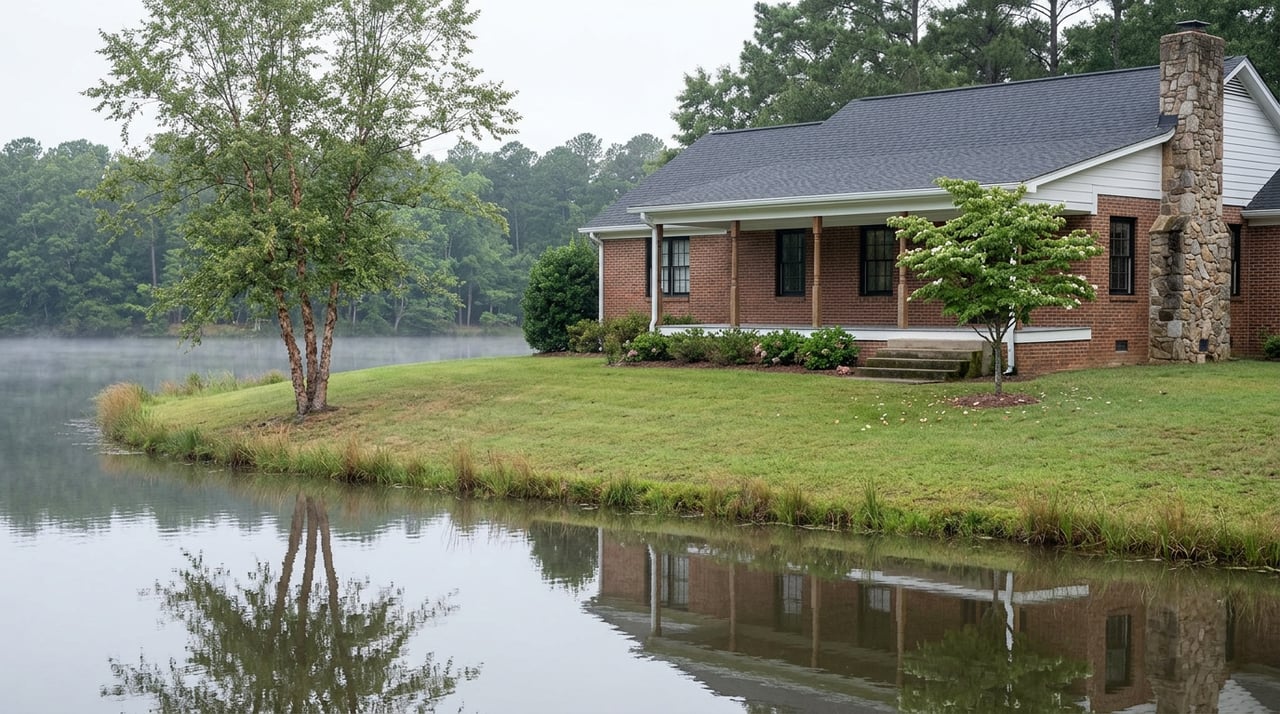
This happens more often than it should in Granite Falls, where Lake Hickory and Lake Rhodhiss front some of the town's most sought-after streets, from the gated slips of Anchors Landing to the coves along River Bend and Doe Run. The house has one owner of record. The dock, it turns out, can have a different one, and Duke Energy will not treat those two facts as related until someone does the paperwork.
Lake Hickory and Lake Rhodhiss are not natural lakes. They are Duke Energy reservoirs, built as part of the Catawba-Wateree hydroelectric system and operated under a federal license. Duke Energy says it owns or controls the lakebed itself, which means a private dock sits on company property under a permit, not a deeded easement that automatically follows the house at closing.
That permit is issued to a person, not a parcel. It is valid for one year at a time, and when a home sells, the new owner has to apply through Duke Energy's Lake Access Permit System to have the structure moved into their name. That application triggers a site visit from a Lake Services representative, who checks the physical dock against what was originally approved.
If everything matches, the transfer goes through. If it does not, the current owner on record becomes the one responsible for fixing it, regardless of who actually built the addition. The Point at LKN's FAQ on the process says Duke Energy "will only provide records that are in the seller's name," which means a buyer cannot simply call and ask whether a dock is compliant. Someone has to own the permit first before Duke Energy will hand over its history.
This is where the risk actually lives. A dock that looks fine from the water can carry structures that were never part of the original approval, an added boat lift, an extra slip, a walkway that got longer over the years. None of that shows up in a home inspection, because home inspectors are not evaluating compliance with a federal shoreline license.
Two developments this year change the calculation for anyone buying or selling waterfront property in Granite Falls right now.
The first is a policy shift from Duke Energy itself. As of July 1, 2026, the company no longer reviews private dock applications on lots where no home has been built. That matters directly for buyers eyeing vacant waterfront lots in communities like Anchors Landing, where building lots along the walking trails and coves are actively marketed as future homesites. A vacant lot that once could carry its own dock permit application now has to wait until a house exists on it, which changes the timeline for anyone planning to buy land first and build later.
The second is water level. The Catawba-Wateree Drought Management Advisory Group declared Stage 2 of its Low Inflow Protocol on May 1, 2026, after a stretch of below-normal rainfall pushed the basin into drought. Lake Hickory, one of the smaller reservoirs in the chain, was confirmed below its target elevation as early as mid-April. Because Lake Hickory sits upstream of the larger reservoirs and drains faster in dry conditions, it tends to show the effects of drought sooner than neighbors on bigger lakes downstream. For a Granite Falls dock, that can mean a walkway that clears plenty of water most years suddenly ending in mud, or a boat ramp that needs a longer approach than it did last season. It is worth checking current water levels before assuming a dock's usable depth matches what a listing photo shows.
For anyone under contract on a waterfront home in Granite Falls, the sequence that avoids surprises looks like this:
None of this is complicated once someone knows to look for it. The trouble is that a dock reads like a fixture in every other part of a real estate transaction, and Duke Energy is the one party in the deal that does not treat it that way.
Does this apply to every dock on Lake Hickory and Lake Rhodhiss? Yes. Both lakes are part of the Catawba-Wateree hydroelectric project, and Duke Energy's Shoreline Management Plan governs piers, docks, and shoreline stabilization on both.
What if the current owner never transferred the permit either? It happens more than people expect, especially on homes that have changed hands a few times. The chain has to be resolved in order, current owner transfers into their name first, before that permit history becomes available to anyone else.
Can we keep using the dock while a transfer is pending? Physically, yes. Legally, the goal is to have the transfer complete and the documentation in hand before the sale closes, which is why several closing attorneys in this market now wait for that confirmation letter rather than treating it as a formality to clean up later.
A dock is one of the reasons people choose Granite Falls over an inland lot in the first place. It is also one of the few pieces of a waterfront home that answers to a federal license instead of a county recorder's office. Treating it like an ordinary fixture is how a clean closing turns into a delayed one.
Baker Realty has spent decades working the shoreline communities of Caldwell County, from the coves off Riverbend Drive to the gated slips at Anchors Landing, and knows this permit conversation is worth having before an offer goes in, not after. If you are weighing a waterfront purchase on Lake Hickory or Lake Rhodhiss, or getting ready to list one, Baker Realty can walk through what a specific dock's paperwork actually shows and what it will take to move it into your name cleanly.
Search All Homes in Granite Falls and the surrounding lake communities to see what's currently on the market.
This article is general information, not legal, tax or financial advice. Consult a qualified professional about your situation.
Stay up to date on the latest real estate trends.
Etiam non quam lacus suspendisse faucibus interdum. Orci ac auctor augue mauris augue neque. Bibendum at varius vel pharetra. Viverra orci sagittis eu volutpat.